When a storm takes the power out, a portable generator is often the first thing out of the garage. The National Weather Service puts it plainly: “Carbon monoxide poisoning is one of the leading causes of death after storms in areas dealing with power outages.”
This page covers one task, portable generator safety: running the machine without hurting anyone. Everything here comes from the Centers for Disease Control and Prevention (CDC), the Consumer Product Safety Commission (CPSC), Ready.gov and the Weather Service, linked at the bottom. For the rest of storm preparation, our hurricane preparedness guide covers supplies, evacuation zones and the timeline.
Where the generator goes
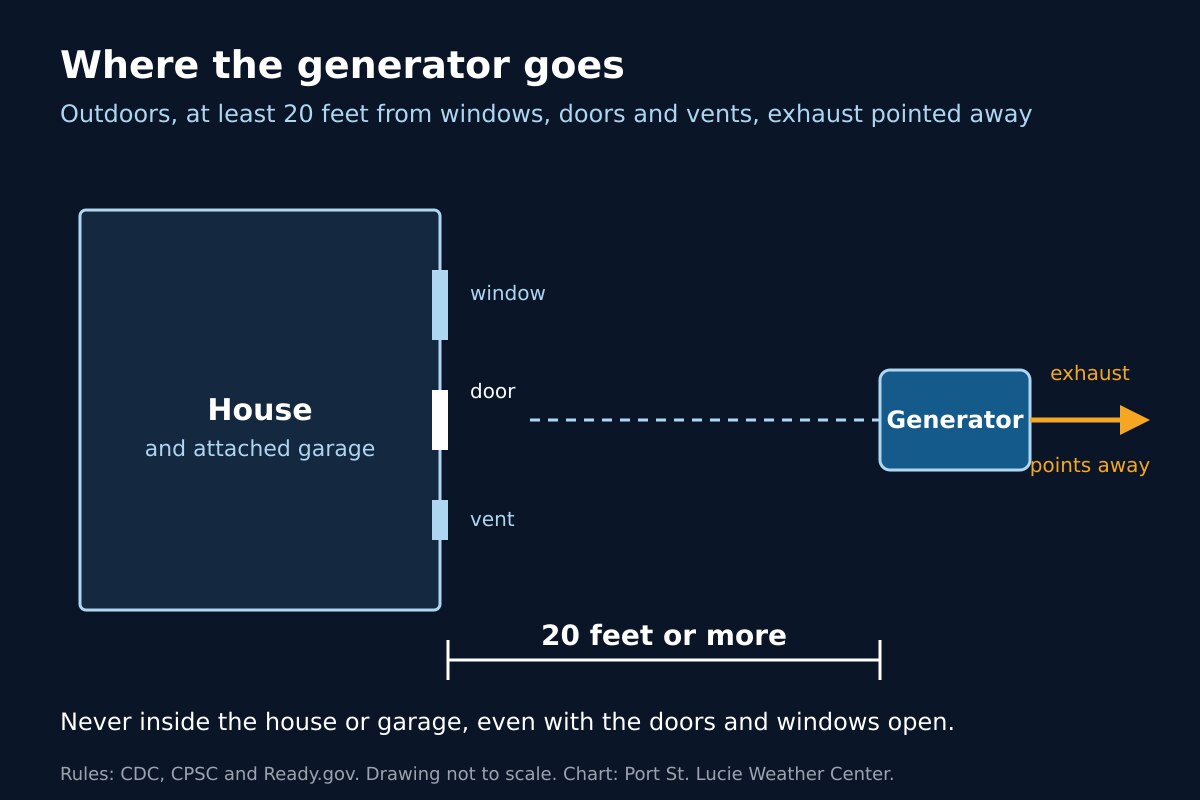
The rule is the same from every agency that publishes one. Run the generator outdoors only, at least 20 feet from windows, doors and vents. Ready.gov adds attached garages to that list, and the CPSC adds one more detail: point the exhaust away from the house.
A garage does not count as outdoors. The CDC and the CPSC both say never to use a generator inside a home or garage, even with the doors and windows open. Carbon monoxide has no color and no smell, the CDC notes, so nothing warns you that it is building up.
Twenty feet is about seven long strides of three feet. Pace it off from the nearest window, door or vent before the storm, while there is daylight and no hurry, and decide where the generator will sit. A spot that puts the exhaust within 20 feet of any opening into the house fails the rule, whatever that spot is called.
The reason for the distance is how much gas a generator makes. The CPSC says one portable generator can produce as much carbon monoxide as hundreds of cars.
A carbon monoxide alarm, before the generator starts
The generator’s placement is half the job. The other half is an alarm inside that can wake you if the gas gets in anyway. What the agencies recommend:
- Battery power. Use battery-operated alarms or alarms with battery backup, so they keep working while the power is out.
- Every level, near every bedroom. Ready.gov and the CPSC say every level of the home; the CDC and the CPSC say near or outside every sleeping area.
- Connected, if you can. The CPSC says interconnected alarms are best: when one sounds, they all sound.
- Check the batteries with the clocks. The CDC suggests checking them when you change your clocks each spring and fall. In 2026 the clocks went back an hour on November 1.
- Replace on schedule. Follow the maker’s instructions, or replace the alarm every five years, the CDC says.
Know the signs of carbon monoxide poisoning
The CDC lists the most common symptoms as headache, dizziness, weakness, upset stomach, vomiting, chest pain and confusion, and notes that they are often described as flu-like. The CPSC adds sleepiness.
If you suspect carbon monoxide poisoning, the CPSC says to get outside to fresh air immediately, and then call 911.
Some people are at greater risk. The CDC names infants, older people, and people with chronic heart disease, anemia or breathing problems. People who are asleep, drunk or under the influence of other substances can die before they ever notice symptoms, which is why the alarm matters at night.
The numbers are not small. The CDC counts more than 400 Americans killed each year by unintentional carbon monoxide poisoning not linked to fires, with more than 100,000 emergency room visits and more than 14,000 hospital stays. The CPSC attributes more than 100 deaths a year to portable generators alone.
Rain, cords and refueling
Beyond carbon monoxide, Ready.gov names three more hazards:
- Keep the generator dry. Protect it from rain and flooding. Touching a wet generator, or a device plugged into one, can give you an electrical shock.
- Use heavy-duty extension cords to connect appliances to the generator.
- Let it cool before you refuel. Fuel spilled on hot engine parts can catch fire. Ready.gov’s distance rule covers the fuel as well as the generator: both are used outdoors, at least 20 feet from the house.
The other fuel burners in a blackout
The generator is not the only source of the gas during an outage. The CDC and Ready.gov list the rest:
- Never burn charcoal indoors. Camp stoves and charcoal grills belong outdoors, at least 20 feet from windows.
- Do not use a gas stove or oven to heat the house.
- Never run a car or truck inside a garage attached to the house, even with the garage door open.
Frequently asked questions about portable generator safety
Sources
- National Weather Service, After a Hurricane.
- Centers for Disease Control and Prevention, Carbon Monoxide (CO) Poisoning Basics.
- U.S. Consumer Product Safety Commission, Carbon Monoxide Information Center.
- Ready.gov, Power Outages.
- National Institute of Standards and Technology, Daylight Saving Time (the 2026 clock change).
Before the next outage
Watch for what is coming on our St. Lucie County alerts page and the live radar, or open the command center for everything at once. A cold night can bring the generator out too; our freeze warning guide covers the rest of that night.