After a hurricane, the papers that prove who you are, what you own and what you are insured for are often the first thing you need and the hardest thing to find. Ready.gov puts the task in two sentences: “Make sure your insurance policies and personal documents, such as ID, are up to date. Make copies and keep them in a secure password-protected digital space.”
This page covers that one task: which hurricane documents to copy, where to keep the copies and the originals, and how to photograph your belongings before a storm so an insurance claim has something to stand on. Everything here comes from Ready.gov, FEMA and the National Flood Insurance Program (NFIP). The Atlantic hurricane season runs June 1 to November 30, so this is a job for a quiet week, not a watch.
The documents to copy
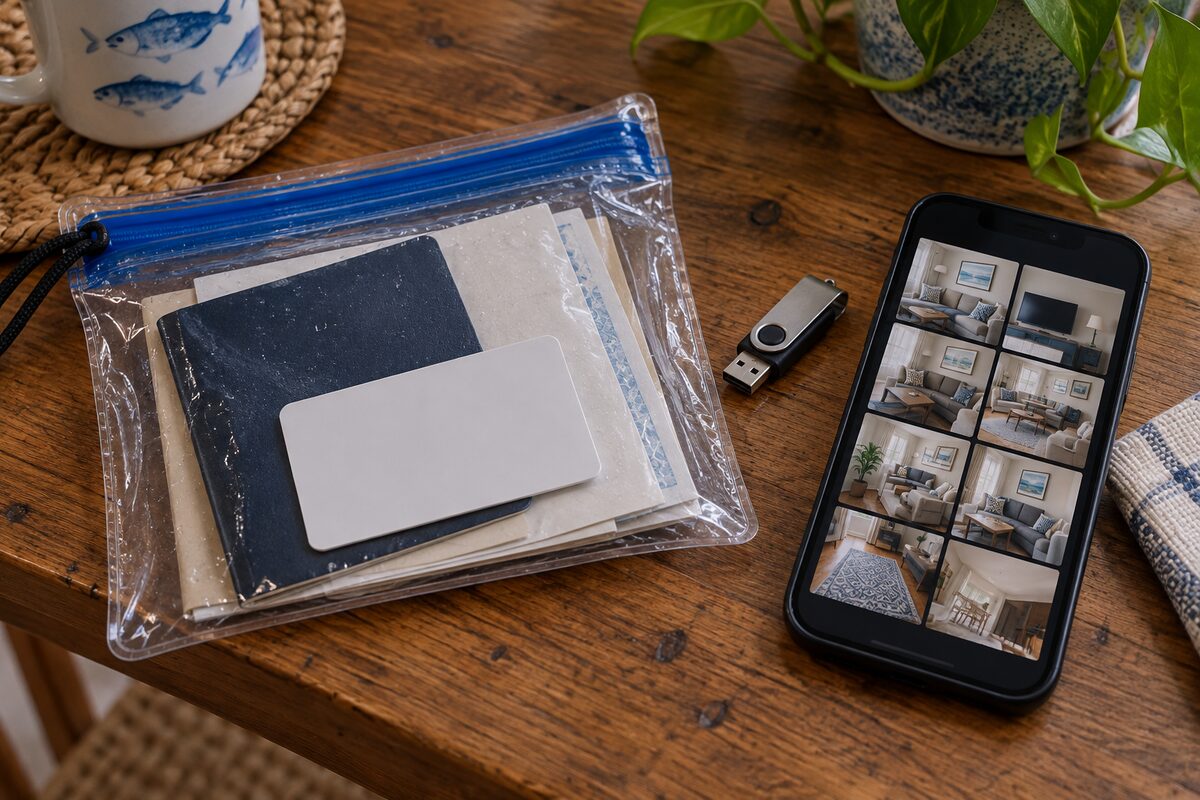
Ready.gov’s financial preparedness page lists what to gather, and for several items it says why. Grouped the way it groups them:
- Identification: a photo ID for each person in the household, birth certificates, Social Security cards (used, Ready.gov notes, to apply for FEMA disaster assistance), military service records and your pets’ ID tags.
- Money and legal papers: mortgage or rent records, insurance policies, proof of income and tax statements (also used to apply for FEMA assistance).
- Medical: your doctors’ contact details, copies of health insurance cards, immunization records and a list of medications.
- Contacts: your bank, insurance agents, doctors and other health professionals, service providers and your place of worship.
The NFIP’s list overlaps and adds passports: save copies of birth certificates, passports, medical records and insurance papers.
Where to keep hurricane documents
Keep two kinds of copy. Ready.gov suggests a safety deposit box, an external drive or the cloud, and its hurricane page asks for a secure, password-protected digital space. A scan or phone photo of each page, saved somewhere you can open from another phone or computer, survives a flooded house and travels with you if you evacuate.
For paper, the NFIP says to keep copies in a safe, dry place and the original documents in a watertight safety deposit box.
Ready.gov also recommends a small amount of cash at home in small bills, because ATMs and credit cards may not work after a disaster, when you need to buy supplies, fuel or food.
Photograph what you own, before the storm
The NFIP’s advice is to take photos and videos of all major household items and valuables, and to store them in a safe, waterproof place because they matter when you file an insurance claim. On a phone, that can be a short video of each room. Save the files with your other copies, not only on the phone.
After the storm, Ready.gov’s next step is to document any damage with photographs and contact your insurance company. The NFIP says to report a flood loss to your agent or carrier immediately, and if you cannot find who that is, to call the NFIP at (877) 336-2627.
Read the policy now: flood is usually separate
FEMA and the NFIP both say it: most homeowners insurance does not cover flood damage. Flood insurance is a separate policy, and it can cover the building, its contents or both. The NFIP sells to renters as well as property owners.
Timing matters. FEMA says there is typically a 30-day waiting period before a new NFIP policy takes effect, unless a government-backed lender requires the coverage or it follows a change to the community’s flood map. A policy bought when a storm is already on the map is usually too late for that storm.
Being outside a high-risk flood zone is not the same as being safe from flooding. The NFIP says nearly one-third of its flood insurance claims come from outside high-risk flood areas. Early November showed it does not take a hurricane: preliminary Weather Service reports put more than a foot of rain on parts of St. Lucie County between November 1 and 3. Our flooded roads page has the totals.
While the policy is out, check that it is current and that the amount and kinds of coverage still fit your home, as Ready.gov advises, and put a copy with the others.
Two more things that protect you
Get benefits electronically. Ready.gov notes a disaster can disrupt mail for days or weeks. If you rely on Social Security or other federal benefits, the Treasury’s options are direct deposit, which you can set up by calling 800-333-1795, or the Direct Express prepaid debit card.
Expect scams. Ready.gov warns that the government will not call, text or message you on social media about owing money or receiving payments, and asks you to report anyone claiming to be a government agent to the Federal Trade Commission at ftc.gov/complaint. Do not click links in texts or emails from people you do not know.
Frequently asked questions about hurricane documents
Sources
- Ready.gov, Hurricanes (season dates, documents, photographing damage).
- Ready.gov, Financial Preparedness (the document list, storage, cash, benefits, scams).
- FEMA, Flood Insurance (the 30-day waiting period).
- National Flood Insurance Program, FloodSmart (copies, originals, home inventory photos, claims outside high-risk areas).
Before the next storm
Keep an eye on what is coming with our St. Lucie County alerts page and the live radar, or open the command center for everything at once. For the rest of the season’s tasks, start with the hurricane preparedness guide, and if the power goes out, read portable generator safety before the generator comes out.